For a long time, LGBTQ+ presence in fantasy followed a familiar script: a central romance, a tragic side couple, or a blink-and-you’ll-miss-it nod to queerness. Representation often began and ended with who loved whom.
But for many readers, especially queer readers, identity is about far more than romance. It’s about belonging, safety, power, and the stories we’re allowed to tell about ourselves. Modern fantasy is starting to catch up—and some of the most compelling queer fantasy today uses magic, gods, and other worlds to ask a deeper question:
What does it mean to exist as yourself in a world that punishes difference?
From Love Stories to Life Stories
Romance will always have a place in queer fantasy. But when LGBTQ+ themes are confined to love plots, they risk becoming decorative rather than transformative. The story might be queer at the edges, while its core still centers straight norms of heroism, institutions, and power.
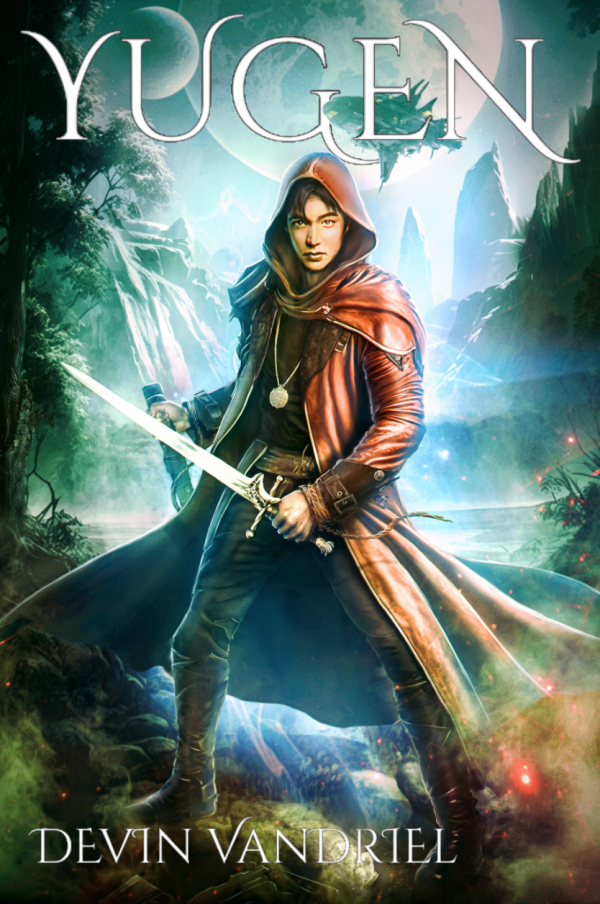
Newer fantasy works, including novels like Yugen, shift the focus. Instead of asking “Will these two characters end up together?”, they ask:
- Who is allowed to belong?
- What does safety look like for someone whose very being is seen as a threat?
- How does a person reclaim their body, mind, and magic after abuse?
- What happens when the institutions meant to protect you become the source of harm?
These are queer questions, even when the page isn’t filled with kisses or meet-cutes. (Because Yugen is not.) They’re about identity, survival, and the right to exist without apologizing.
Queerness as Difference, Not Decoration
In Yugen, the protagonist Vian is marked as different from the start. His forbidden magic—triggered by eye contact, dragging other people’s memories and thoughts into his mind—isn’t just a plot device. It functions like a metaphor for being queer in a hostile system:
- His power isolates him.
- If discovered, it could mean execution.
- He spends years contorting himself to fit an institution that was never built for someone like him.
This is a familiar story for many queer readers: learning to monitor every gesture, every word, every glance, just to survive environments that insist on sameness.
Fantasy, at its best, allows that experience to be explored with teeth. Instead of abstract “difference,” we get forbidden magic, divine bloodlines, and secret brotherhoods—all of which sharpen the stakes of being who you are.
Institutions, Trauma, and the Queer Body
One of the most powerful shifts in modern LGBTQ+ fantasy is its willingness to name and confront institutional harm: abusive schools, religious orders, military academies, or—like in Yugen—a Guardian order that claims to serve justice while hiding systemic abuse.
For queer readers, this often hits close to home. Many have experienced:
- schools that look the other way at bullying
- faith communities that demand silence or “correction”
- workplaces where safety depends on staying closeted
Fantasy doesn’t have to mirror these systems exactly to speak to them. A fortress like Frozen Stone, where recruits are drugged, assaulted, and silenced by rank and ritual, resonates because it’s recognizable. It says: This isn’t just about monsters and magic. This is about what happens when power decides some bodies are expendable.
In that context, LGBTQ+ themes become inseparable from trauma and recovery. The story is no longer just “Is there a queer character here?” but How does this world treat people who don’t fit its rules—and what does it cost them to survive?
Found Family as a Queer Theology
If institutional betrayal is one half of the equation, found family is often the other.
In Yugen, Vian’s true belonging doesn’t come from the Guardian order that raised him. It comes from the Executioners—a brotherhood who literally share his memories and pain, then choose him anyway. They don’t erase his trauma. They witness it. They carry it with him.
That’s a profoundly queer move.
Found family has become one of the most beloved tropes in LGBTQ+ fantasy because it reflects a real-world truth: many queer people survive not because institutions protect them, but because they build their own networks of care. Chosen siblings, mentors, friends, lovers—people who say, You don’t have to be less to stay here. Bring all of you.
In stories like Yugen, found family isn’t just cozy. It’s radical. It:
- validates the survivor’s story rather than questioning it
- offers acceptance without requiring conformity
- rewrites destiny from “You were made to serve this broken system” to “You were made for more than what hurt you”
The result is a form of queer hope that doesn’t pretend the trauma never happened. It insists that belonging is still possible afterward.
Beyond Representation: Identity as the Engine of the Story
What distinguishes surface-level representation from truly LGBTQ+-centered fantasy is what drives the narrative.
In many older fantasies, queerness could be lifted out and the plot would remain mostly intact. In newer stories, including Yugen, identity and power are entangled:
- Vian’s forbidden magic shapes every relationship he has.
- His inability to meet others’ expectations of masculinity—he can’t even wield a sword—is core to his arc.
- His journey from Guardian recruit to Executioner is, in many ways, a transition story: a death of the imposed self and a rebirth into a name and role he chooses.
Crucially, none of this requires the book to be shelved as “romance.” The queerness is in:
- how the character sees himself
- who is allowed to see and accept his whole self
- whether the world will punish or honor that authenticity
That’s the move “beyond romance to identity”: queerness becomes the engine, not the ornament.
Why These Stories Matter Now
We live in a moment where LGBTQ+ rights are both more visible and more contested than ever. Against that backdrop, fantasy that treats queer identity as central—not optional—does important work.
These stories:
- give readers vocabulary and metaphors for experiences that are hard to articulate
- offer catharsis for those who have survived institutions that failed them
- imagine worlds where justice may be imperfect, but resistance is real and meaningful
Books like Yugen don’t promise neat resolutions. Trauma doesn’t vanish. Institutions don’t magically become pure. But they do offer something just as vital: characters who refuse to disappear, who carve out spaces of belonging in the cracks of broken systems, and who prove that surviving is itself a kind of magic.
Looking Forward
As more LGBTQ+ fantasy moves beyond the question of “Who gets to be in love?” to “Who gets to exist fully and safely?”, the genre becomes richer, sharper, and more honest.
We’ll still have room for swoony romances and joyful coming-out arcs. But alongside them, we’re seeing:
- stories of survivors rebuilding their lives in the ruins of failed institutions
- protagonists whose queerness is inseparable from their power, their doubt, and their destiny
- worlds that don’t just tolerate difference, but are transformed by it
That’s the frontier of queer fantasy: not merely being seen, but being centered. Not just getting the kiss, but getting the story.
If stories about queerness, trauma, and belonging speak to you, Yugen belongs on your shelf.
Yugen is a dark, character-driven fantasy where a cursed Guardian recruit is punished for being different, betrayed by the institution he was raised to serve, and forced to choose between a perfect illusion and the brutal work of becoming himself. It weaves LGBTQ themes, institutional corruption, and a fierce found family into a single, haunting journey from guilt to identity.
Step into Vian’s world and see what happens when forbidden magic, survivor justice, and queer found family collide.
👉 📗 Pre-order your copy – Ready to dive into Vian’s world the moment it’s released? Pre-ordering Yugen not only guarantees you’ll have it on launch day, but it also sends a powerful signal to retailers and algorithms that this book matters. Every pre-order counts toward launch week sales, which can make or break a debut novel. Secure your copy now and be among the first to experience this dark, transformative journey. [Pre-order Yugen from Amazon here – Click Here]
📖 Sign up to be an ARC Reader – I get it—not everyone can afford to pre-order a book, and that’s totally okay! If you’d love to read Yugen but can’t swing the cost right now, I need YOU. I’m looking for ARC (Advanced Reader Copy) readers who’ll get the book completely free in exchange for leaving an honest review on Amazon, Goodreads, or wherever you love to share your thoughts on books. Your reviews are pure gold and help other readers discover Yugen. Interested? [Apply to be an ARC reader here – Click Here]
💬 Spread the word – If Yugen sounds like something you or someone you know would love, share this post! Tag your fantasy-loving friends, share it in your book groups, or just tell someone about it. Word of mouth is everything for debut authors.
📚 Add it to your Goodreads TBR – Even though the book isn’t out yet, adding it to your “to-read” list helps build momentum and lets other readers discover it. [Add on Goodreads – Click Here]



Leave a Reply