In fantasy, we’re used to a particular kind of heartbreak.
The mentor dies.
They go down in a blaze of light or a quiet sacrifice, leaving the hero with a sword, a prophecy, and a grief so sharp it forges them into who they were “meant” to be. Think of all the robed wizards, battle-scarred knights, and wise teachers who exist, narratively, to pour everything into the protagonist… and then disappear.
The mentor’s death is the push.
But what happens when the mentor doesn’t die for you—he uses you?
What happens when the person who should protect you, the one who feels like a parent, is the one who betrays you the most?
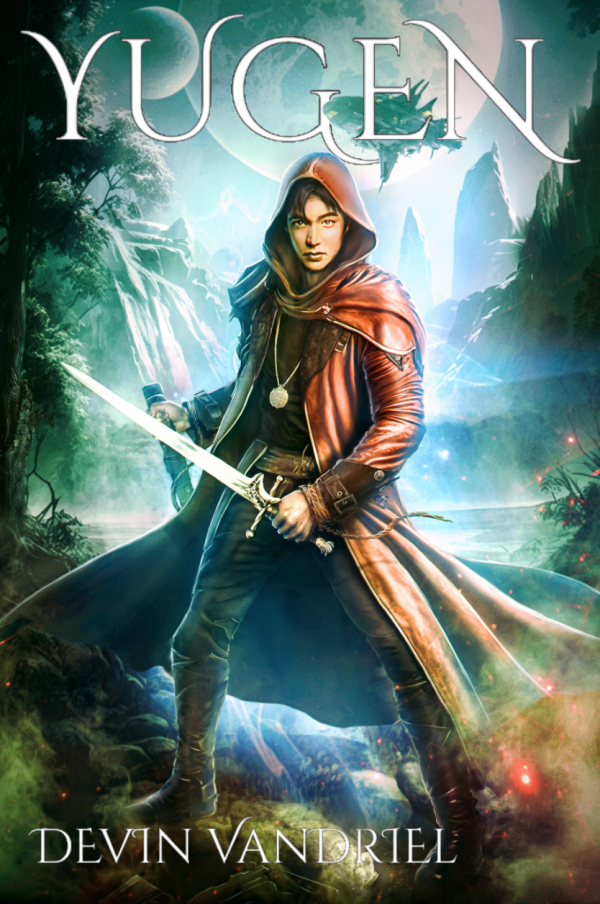
That’s the question at the heart of Yugen, and of Vian’s relationship with Master Brantley.
The Classic Mentor Trope: Why We Love When They Die
The “mentor dies to motivate the hero” trope is everywhere in fantasy because it does several things very efficiently:
- It hands the story over to the protagonist.
Once the mentor is gone, there’s no safety net. The hero can’t ask for advice. They have to grow up—fast. - It gives clean, uncomplicated grief.
The mentor was wise, loving, flawed in acceptable ways. Their death hurts, but it’s a pure pain. We can miss them without questioning whether we were ever truly safe with them. - It gives the hero a simple story about their pain.
“They died to save me.”
“They believed in me.”
That story becomes fuel. Their death is framed as necessary, noble, and meaningful.
This is loss that hurts but doesn’t destabilize the ground under your feet. The world remains morally legible. The parent/mentor figure might be gone, but they were good, and they loved you, and the story respects that.
The mentor dies so the hero can live, and grow, and become.
In Yugen, the Mentor Lives — and Betrays
Vian’s story takes that comforting pattern and rips it wide open.
Master Brantley isn’t just Vian’s teacher. He’s a surrogate father, the closest thing Vian has to safety and approval in a rigid, brutal Guardian order. Vian measures his worth through Brantley’s eyes. When Brantley praises him, Vian glows. When Brantley withholds, Vian bends himself into knots to earn it back.
So when Vian overhears Brantley condemning him to the lowest possible rank—Rock Guardian, a dead-end post reserved for failures—it isn’t just a career blow.
It’s a shattering of reality.
All the years of trust, of leaning on Brantley as a father figure, are suddenly poisoned. And as the story unfolds, Vian learns this wasn’t a one-time misjudgment. Brantley has been manipulating his record for years, quietly sabotaging him to use Vian’s potential for his own escape plan.
The mentor doesn’t die for the hero.
He lives long enough to exploit him.
This is a very different kind of wound.
There’s no noble sacrifice to cling to. There’s no pure grief. There’s just the realization that the person who should have protected you saw you as a tool, a resource, a means to an end. That the love you thought you had was conditional on your usefulness.
For Vian, Brantley is not just “the mentor who betrayed him.” He is a father-shaped betrayal.
And when Vian is finally initiated into the Executioners and given a new name—Yugen—one of his first acts of justice is to execute Brantley himself. It’s not a triumphant, fist-pumping revenge scene; it’s the grim, complicated closure of someone confronting the person who broke him and choosing, finally, to end that power.
Fantasy Meets Real Life: When Parents Betray Their Children
This isn’t just a clever twist on a trope.
It’s uncomfortably close to real life.
In reality, the deepest betrayals so often come not from distant villains but from parents and parent-figures—the very people who were supposed to keep us safe.
Sometimes that betrayal is overt and brutal:
- Physical, sexual, or emotional abuse
- Chronic neglect
- Turning a blind eye to predators in the home or community
Sometimes it’s quieter but just as corrosive:
- Weaponizing guilt and obligation (“After everything I’ve done for you…”)
- Punishing autonomy as “disrespect”
- Controlling a child’s body, identity, or future “for their own good”
What makes this betrayal so devastating is the story parents tell to justify it:
- “I’m only doing this because I love you.”
- “You’ll understand when you’re older.”
- “This hurts me more than it hurts you.”
- “If you were a better child, I wouldn’t have to do this.”
These excuses allow the parent to keep seeing themselves as the hero of the story—even as they are harming their child. And often, the child internalizes that narrative. They grow up thinking:
- “I was too sensitive.”
- “I made them angry; it’s my fault.”
- “They did what they had to do.”
That’s the real horror Yugen leans into: the way love and harm can be tangled together, and how institutions (like the Guardian order) help abusers feel justified and untouchable.
Brantley isn’t a distant villain. He’s a father figure who uses the Guardian system to excuse what he does to Vian. The betrayal is not “out there.” It’s inside the family, inside the institution, inside the language of duty and love.
Why This Kind of Story Matters
Stories like Yugen refuse to give us the comforting lie that all parental or mentor figures are fundamentally good, or that their harmful actions are always tragic but understandable.
Instead, they:
- Name betrayal for what it is.
It’s not “tough love” when someone deliberately sabotages your life while pretending to guide you. It’s not “for your own good” when your safety and agency are treated as expendable. - Validate the complexity of the wound.
You can miss who you thought they were and still acknowledge what they did. You can grieve the father figure and hold him accountable. - Offer a different path to growth.
Vian doesn’t grow because a good mentor dies for him. He grows because he survives a bad one. He finds belonging not in the institution that harmed him, but in a found family—the Executioners—who see his pain, share it, and accept him fully. - Reflect the experiences of real survivors.
For many readers, especially trauma survivors and those who’ve endured family or institutional abuse, the idea of a purely benevolent mentor is almost alien. Yugen says: you’re not broken for having a different story. Your pain is valid, and your healing doesn’t have to look like the neat arc of heroic fantasy.
Found Family After Betrayal
One of the most powerful counterpoints to Brantley in Yugen is the found family Vian discovers.
The Executioners are not gentle, but they are honest. Their initiation ritual forces them to share one another’s memories—each member literally witnesses Vian’s trauma and guilt. Every sin laid bare. Instead of using that vulnerability against him, they hold it with him. They don’t demand that he rewrite his story to protect the reputation of the institution or the surrogate father who hurt him.
They say, in essence:
- “We see what was done to you.”
- “We know who did it.”
- “You are not what they said you were.”
That’s a radically different kind of mentorship. Less “wise old man who sacrifices himself so you can be great,” more “siblinghood of scarred people who refuse to let one another carry the weight alone.”
For anyone who has had to walk away from a harmful parent or “family” and build a new one from scratch, Vian’s transformation into Yugen is more than fantasy. It’s recognition.
The Stories We Tell About Mentors — And About Ourselves
The mentor trope in fantasy has always been about inheritance: what is passed down, and at what cost.
- In traditional stories, the mentor passes down wisdom, weapons, and blessings—and then dies, leaving a clean legacy.
- In Yugen, Brantley passes down trauma, sabotage, and betrayal—and lives long enough to be confronted for it.
Real life is rarely as clean as the first version. More often, it looks like the second: messy, painful, morally complicated. The people who shaped us are not always people we can safely worship. Sometimes, the bravest thing we can do is stop making excuses for them.
Vian’s journey asks a hard question:
What if the person you needed most was also the one who hurt you the most—and you chose, finally, to stop letting them?
That’s a story worth telling, and retelling, far beyond fantasy.
Don’t just read a fantasy. Read one that understands.
📗 Pre-order your copy – Ready to dive into Vian’s world the moment it’s released? Pre-ordering Yugen not only guarantees you’ll have it on launch day, but it also sends a powerful signal to retailers and algorithms that this book matters. Every pre-order counts toward launch week sales, which can make or break a debut novel. Secure your copy now and be among the first to experience this dark, transformative journey. [Pre-order Yugen from Amazon here – Click Here]
📖 Sign up to be an ARC Reader – I get it—not everyone can afford to pre-order a book, and that’s totally okay! If you’d love to read Yugen but can’t swing the cost right now, I need YOU. I’m looking for ARC (Advanced Reader Copy) readers who’ll get the book completely free in exchange for leaving an honest review on Amazon, Goodreads, or wherever you love to share your thoughts on books. Your reviews are pure gold and help other readers discover Yugen. Interested? [Apply to be an ARC reader here – Click Here]
💬 Spread the word – If Yugen sounds like something you or someone you know would love, share this post! Tag your fantasy-loving friends, share it in your book groups, or just tell someone about it. Word of mouth is everything for debut authors.
📚 Add it to your Goodreads TBR – Even though the book isn’t out yet, adding it to your “to-read” list helps build momentum and lets other readers discover it. [Add on Goodreads – Click Here]
Stay tuned, because next week we’ll be talking about what it’s really like to give everything, to sacrifice, to put it all on the line – and still not be enough.
 Janessa Keeling
Leave a comment